
How to Choose Paper for Custom Notebooks: Tomoe River S & PUNDY Papers
How to Choose Paper for Custom Notebooks: Tomoe River S & PUNDY Papers
Compare four notebook papers - PUNDY Kaan, Maple, Bulky and Tomoe River S - by gsm, thickness, pen use and printing before you specify.
PUNDY / PAPER SELECTION How to choose paper for custom notebooksChoose the paper. Shape the notebook. A paper selection guide for custom journals and planners. Compare PUNDY Kaan lightly coated woodfree paper, PUNDY Maple woodfree offset paper and PUNDY Bulky woodfree offset paper with Tomoe River S paper, from everyday pen use to page thickness, print design and finished-book requirements. Compare four paper optionsDiscuss your notebook project | 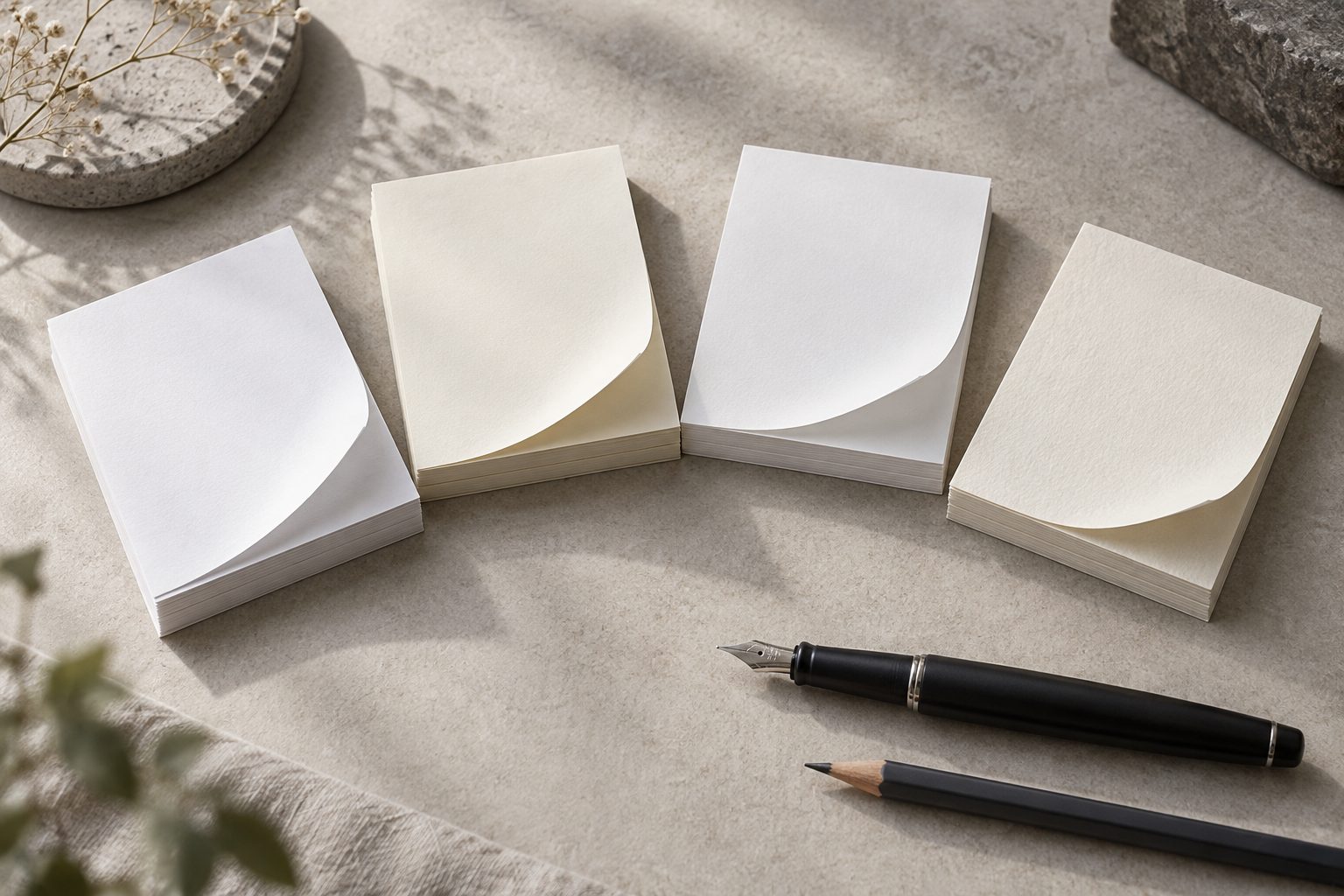 |
01 / START WITH THE PRODUCT
Start with the pen, the page count and the print
For a custom notebook, choose paper by the pens your customers use, the required page count and the printed layout. Then compare sheet weight, thickness, reverse-side readability and the feel of a bound sample. These decisions work together when developing a journal or planner for your brand.
Quick selection guide: Start with PUNDY Kaan Paper for everyday writing. Compare PUNDY Maple Paper and PUNDY Bulky Paper for cream-toned pages and fountain-pen projects; PUNDY Bulky has the thicker reference specification. Consider Tomoe River S 52 gsm for lightweight, high-page-count notebooks. Confirm pen performance and the finished construction with samples.
Everyday note-takingBallpoint and gel pens, meeting notes and practical working layouts. Explore PUNDY Kaan Paper | Fountain-pen usersCompare PUNDY Maple, PUNDY Bulky and Tomoe River S with the same nib and ink. Plan a pen evaluation | A substantial page feelCompare PUNDY Bulky with PUNDY Maple, then assess the planned page count in a bound sample. Explore PUNDY Bulky Paper | More pages, less paper weightConsider Tomoe River S together with binding and reverse-side readability. Explore Tomoe River S |
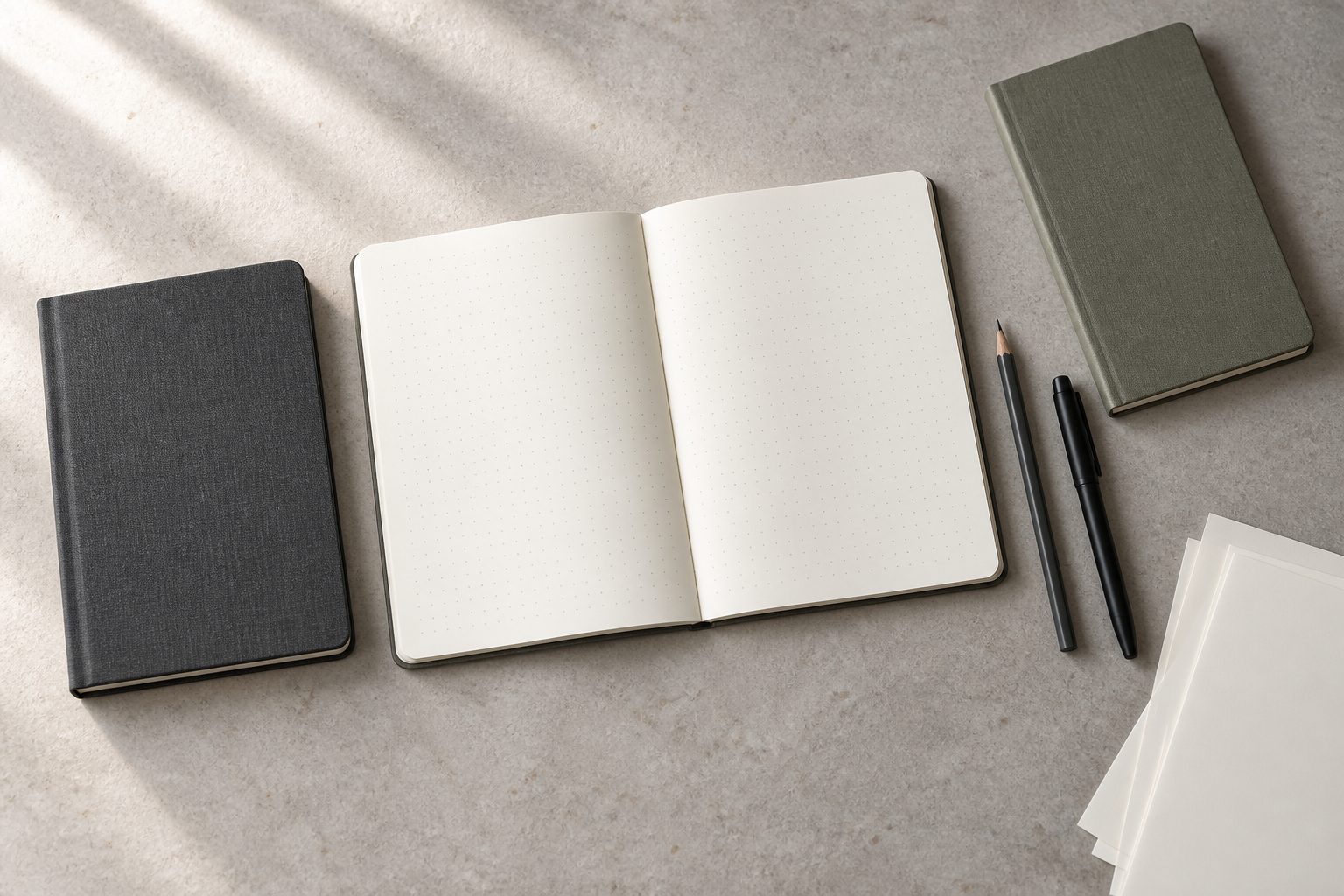
02 / SPECIFICATION COMPARISON
Tomoe River S and three PUNDY paper options
Use reference specifications to shortlist materials, then use samples to assess writing and printing.
Scroll the table sideways on mobile to see all four papers.
| Compare | PUNDY Kaan Paper | PUNDY Maple Paper | PUNDY Bulky Paper | Tomoe River S |
|---|---|---|---|---|
| Selection focus | Everyday writing and printed content | Cream-toned writing pages; fountain-pen projects | A more substantial page feel; fountain-pen projects | Lightweight paper for high page counts |
| Full specification name | PUNDY Kaan lightly coated woodfree paper | PUNDY Maple woodfree offset paper | PUNDY Bulky woodfree offset paper | Tomoe River S paper |
| Reference weight | 70 / 80 / 100 / 120 gsm | 80 gsm | 90 gsm | 52 gsm in this guide |
| Reference sheet thickness | Approx. 80 / 90 / 110 / 140 µm, in weight order | Approx. 100 µm | Approx. 125 µm | Confirm for the selected stock |
| Shade | White tone; confirm by sample | Cream tone; confirm by sample | Cream tone; confirm by sample | Confirm available shade by sample |
| Ballpoint / gel pens | Everyday writing starting point; check glide and drying | Check pen feel and drying with intended pen models | Check pressure marks and double-sided readability | Check drying, pressure marks and reverse-side visibility |
| Fountain pens | Evaluate by sample if fountain pens are a key requirement | PUNDY fountain-pen-friendly option; check intended inks | PUNDY fountain-pen-friendly option; check intended inks | A candidate for fountain-pen projects; check nib and ink combinations |
| Print evaluation | Compare colour artwork and writing areas | Check ruling, ink coverage and writing areas | Check ruling, ink coverage and page feel | Check fine ruling and reverse-side distraction |
| Cost / availability | Confirm by project | Confirm by project | Confirm by project | Confirm by project |
For quotations and artwork specifications, please use the full names above together with the required weight and shade: PUNDY Kaan lightly coated woodfree paper, PUNDY Maple woodfree offset paper, PUNDY Bulky woodfree offset paper, or Tomoe River S paper.
Reading the specifications: gsm means grams per square metre; µm means micrometres. A thickness of 100 µm equals 0.10 mm. Weight and thickness describe different properties. Values are references with material tolerances, not a list of guaranteed stocked options. Confirm paper version, weight, shade, quantity and timing for each project.
03 / FOUR SELECTION STARTING POINTS
Find a paper that fits your product brief
EVERYDAY WRITING / PRINTED CONTENT PUNDY Kaan lightly coated woodfree paperPUNDY Kaan lightly coated woodfree paper (PUNDY Kaan) is a starting point for everyday notebooks used with ballpoint and gel pens. Its lightly coated, smooth surface can be considered when writing pages also include brand information, diagrams or colour artwork. Assess pen glide, drying and the appearance of printed content together. If fountain-pen compatibility is central to your product, compare the intended stock with the other candidates using the same pen and ink. | CREAM-TONED PAGES / FOUNTAIN PENS PUNDY Maple woodfree offset paperPUNDY Maple woodfree offset paper (PUNDY Maple) is a fountain-pen-friendly option for journals, planners and writing notebooks. Its reference specification is 80 gsm and approximately 100 µm thick, with a cream tone. Consider PUNDY Maple when pen feel and a cream-toned page are part of the product brief. Check drying time, feathering and reverse-side readability with the inks your customers are likely to use. |
THICKER PAGE FEEL / FOUNTAIN PENS PUNDY Bulky woodfree offset paperPUNDY Bulky woodfree offset paper (PUNDY Bulky) has a reference specification of 90 gsm and approximately 125 µm, with a cream tone. It is thicker than the 80 gsm PUNDY Maple stock shown in this guide. PUNDY includes PUNDY Bulky among its fountain-pen-friendly paper options. Shortlist it when a more substantial page feel matters, then compare writing behaviour and the thickness of the finished book with PUNDY Maple. | LIGHTWEIGHT PAPER / HIGH PAGE COUNTS Tomoe River S paperTomoe River S paper is a candidate when a journal or planner needs a high page count while limiting paper weight. This guide uses the 52 gsm option as its reference. Evaluate reverse-side visibility, drying and ink appearance with the intended pen combinations. Final thickness and opening behaviour also depend on the binding, grain direction and cover. See our Tomoe River paper notebook service for the dedicated overview. |
PUNDY Kaan, PUNDY Maple and PUNDY Bulky are PUNDY paper option names. Use the same name, weight and approved shade in your specification request and sample approval.
04 / PEN AND PAPER
Evaluate the pens your customers actually use
For ballpoint pens, compare glide, pressure marks and double-sided readability. For gel pens, also check drying and smudging. For fountain pens, include the nib, ink and ink flow in the evaluation. Fountain-pen-friendly describes a selection direction; performance still depends on the pen-and-ink combination.
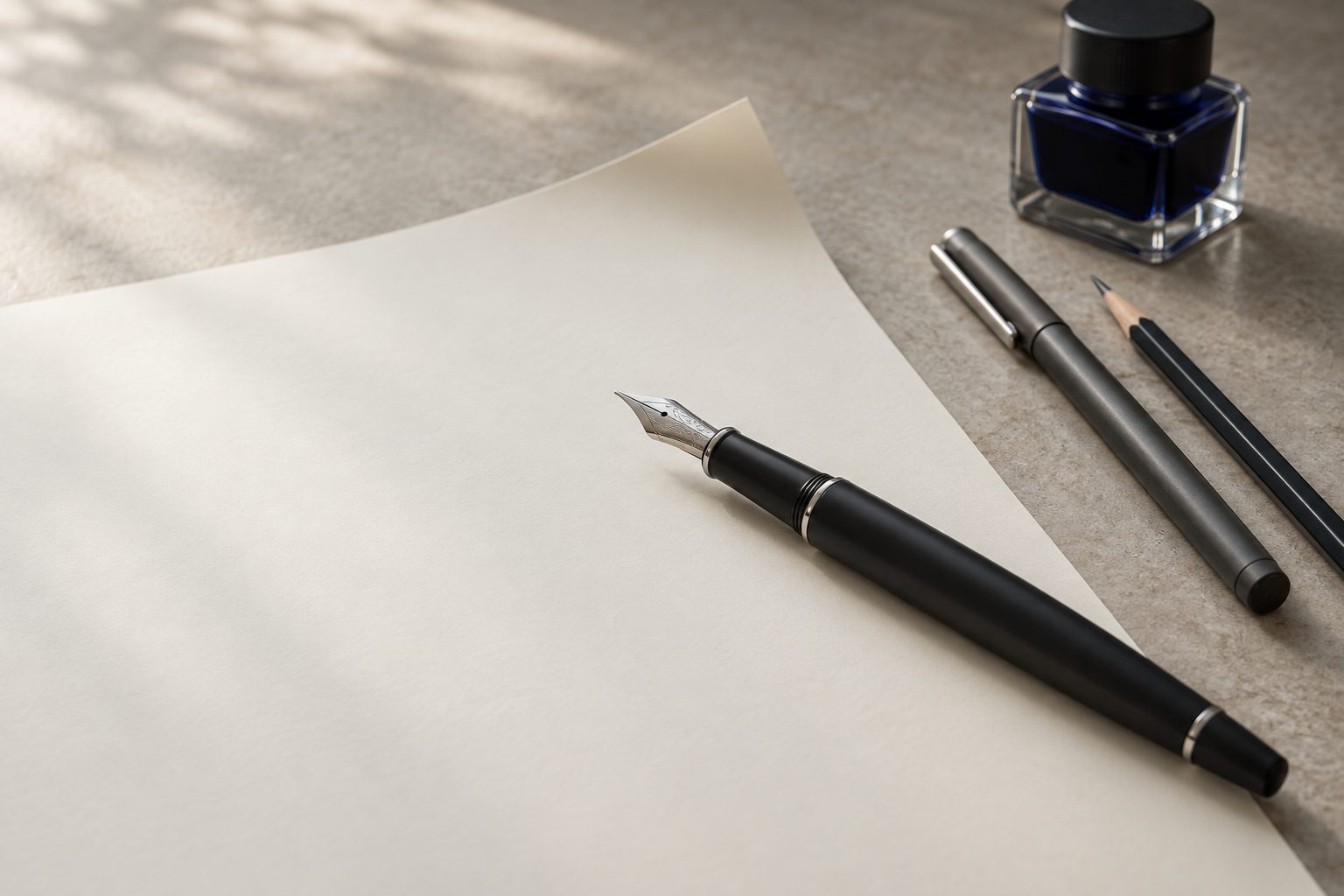
GhostingWriting on the front remains visible from the reverse side. Assess how much it distracts from reading or writing on the back; visibility alone does not mean the ink has penetrated the sheet. | Bleed-throughInk penetrates the sheet and leaves ink marks on the reverse. Evaluate it using the intended pen, ink and amount of ink applied. | FeatheringInk spreads along paper fibres, creating fuzzy edges around a line. Compare the clarity of the same letters and strokes across candidate papers. |
For a useful comparison, write the same content on each candidate paper with the same pen and ink under similar conditions. Photograph the front and back in consistent light. Suggested drying checks at 5, 15, 30 and 60 seconds can help compare smudging; these are evaluation steps, not measured drying-time claims for the papers in this guide.
Keep the approved sample linked to the exact paper name, version, weight, shade and product specification.
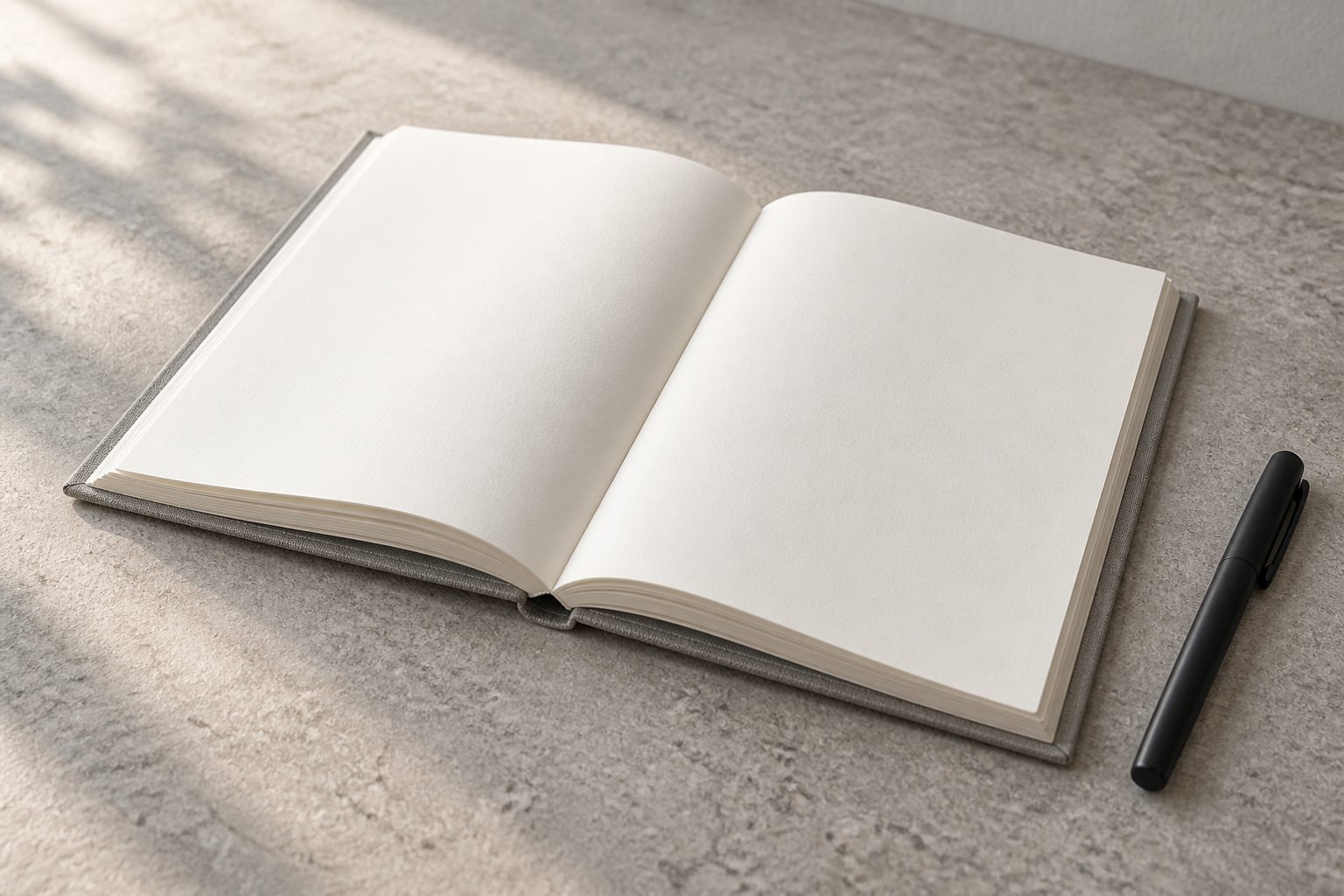 | 05 / FROM SHEET TO FINISHED BOOK Specify the notebook as a complete productCompare thickness and weight separatelyWith the same size and page count, gsm affects paper weight while sheet thickness affects the book block. Covers, endpapers, binding and accessories also contribute. Confirm the complete construction with a bound sample. Check the same printed layoutPrint the same ruling, dot grid, text and artwork on candidate papers. Review line clarity, colour appearance, reverse-side distraction and writing over printed areas. Confirm suitable printing and finishing conditions for the selected stock. Compare quotes on the same specificationHold size, page count, print coverage, quantity and binding constant when comparing a paper change. Discuss stock availability, minimum quantities and timing for the actual project. |
06 / BUYER QUESTIONS
Custom notebook paper FAQs
Which paper should I choose for a custom notebook?
Start with the main pen type, page count and printed layout. PUNDY Kaan lightly coated woodfree paper is a starting point for everyday ballpoint and gel-pen notebooks. Compare PUNDY Maple woodfree offset paper and PUNDY Bulky woodfree offset paper for cream-toned writing pages, including fountain-pen projects. Consider Tomoe River S paper when low paper weight and a high page count matter. Confirm the choice with representative paper and binding samples.
Does higher gsm mean better fountain-pen performance?
Gsm measures paper weight per square metre, not ink resistance. A heavier sheet is not automatically more resistant to feathering or bleed-through. Compare the intended paper with the same pen, nib and ink, then check drying time and readability on the reverse side.
What is the difference between PUNDY Maple Paper and PUNDY Bulky Paper?
The reference specification for PUNDY Maple woodfree offset paper is 80 gsm and approximately 100 micrometres thick. PUNDY Bulky woodfree offset paper is 90 gsm and approximately 125 micrometres thick. PUNDY Bulky is the thicker of these two reference stocks. Both are PUNDY fountain-pen-friendly paper options; choose between them through pen-and-ink sampling and the intended finished-book feel.
Is Tomoe River S suitable for ballpoint and gel pens?
Tomoe River S paper can be, but include the exact pen models in your sample evaluation. Check drying, pressure marks and reverse-side visibility, especially when planning double-sided pages. A paper selected for fountain-pen use still needs to suit the everyday pens your customers use.
Can notebook paper be printed with grids, dots or colour artwork?
Printed layouts can be assessed as part of the custom notebook project. Use the same artwork on candidate papers to compare line clarity, colour appearance, reverse-side visibility and writing over printed areas. The printing method and final settings depend on the selected paper and production conditions.
What should I send PUNDY for a paper recommendation and quote?
Share the product use, main pen types, finished size, page count, quantity, binding preference, print coverage, delivery destination and target delivery date. Include any paper or notebook references. PUNDY can then discuss candidate papers, sample arrangements and a project-specific quotation.
Discuss paper for your next notebook
Share the intended use, pen types, finished size, page count, quantity, binding, print coverage, delivery destination and target date. PUNDY can help shortlist paper options for your custom notebook, journal or planner project.
Request a project quoteAvailable paper specifications, sampling arrangements, minimum quantities and timing are confirmed for each project.
Updated 9 September 2026. Specifications are selection references. Available materials, writing performance and production conditions are confirmed through the project quotation and approved samples.
Press Release
-
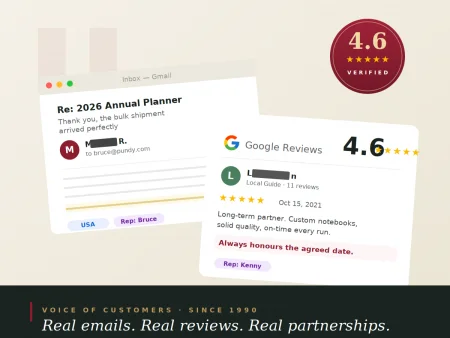 4.6★ on Google · Trusted Since 1990
Real emails from international clients. Real Google reviews from long-term partners. See what 36 years of getting the details right looks like — in their own words.
Read More -
 Awards of Taiwan Golden Print
PUNDY won awards of Taiwan Golden Print in 2011.
Read More -
 New Notebook for 2015
The business notebook designed by PUNDY is especially made for office users who love simple and fashionable designs.
Read More