
Tomoe River S 52gsm vs 68gsm: A Factory Test with 5 Pens
Tomoe River S 52gsm vs 68gsm: A Factory Test with 5 Pens
We tested Tomoe River S 52gsm and 68gsm with five pens: show-through, sheen, feathering and smudging compared, plus which weight fits your notebook.
Tomoe River S 52gsm vs 68gsm: A Factory Test with 5 Pens
In PUNDY's October 2026 writing test, Tomoe River S 52gsm produced the strongest fountain-pen sheen and the most show-through of four papers. The 68gsm version showed less show-through, similar to the 80gsm reference paper we tested, and kept visible sheen. Neither weight feathered with the five pens. Choose 52gsm when sheen and a light, high-page-count book matter most; consider 68gsm when less show-through matters more. These are visual observations from a limited factory test.
What changed with Tomoe River S
Tomoe River paper was originally made by Tomoegawa. The current Tomoe River S is made by Sanzen, which, according to The Gentleman Stationer, bought the formula and naming rights. Early reviews described the new paper as stiffer, with more tooth and somewhat less show-through than the original (The Gentleman Stationer, 2022). This article compares the two current weights, 52gsm and 68gsm.
How we tested
In October 2026 one writer used the same five pens on four papers: Tomoe River S 52gsm, Tomoe River S 68gsm, and two PUNDY stock papers as references, PUNDY Maple (80gsm) and PUNDY Bulky (90gsm, cream). The pens were a Pilot Juice gel pen, a fineliner, a Pilot Hi-Tecpoint, a highlighter and a TWSBI ECO fountain pen, the same instruments on every paper. We photographed the front, the back (for show-through) and the fountain-pen strokes at an angle after drying (for sheen), and filmed a rub test after writing to see how easily the fountain-pen strokes smudged.
Limits: one writer, one fountain pen and one ink, five pens in total, and phone photos and video. Results are specific to these tools. Paper color, lighting and camera angle also affect what you see. Sheen changes with light, angle, nib and ink. The reference papers are the samples we tested and are not benchmarks for all 80gsm or 90gsm paper. We took no lab measurements.
Tomoe River S 52gsm vs 68gsm: results
Swipe sideways to see the full table.
| Tomoe River S 52gsm | Tomoe River S 68gsm | PUNDY Maple (reference) | PUNDY Bulky (reference) | |
|---|---|---|---|---|
| Feathering (5 pens) | None seen | None seen | None seen | None seen |
| Bleed-through | None seen | None seen | None seen | None seen |
| Show-through | Most of the four | Similar to PUNDY Maple | Similar to 68gsm | Least of the four |
| Fountain-pen sheen | Strongest, pink-metallic when dry | Visible | Visible, leaning purple | Less visible |
| Smudging when rubbed after writing (visual) | More | More | Less | Less |
Show-through: writing visible from the back, without ink passing through. Bleed-through: ink passing through the sheet. Feathering: ink spreading along fibers past the stroke edge. On PUNDY Bulky, overlapping highlighter strokes looked darker; we recorded that separately from feathering.
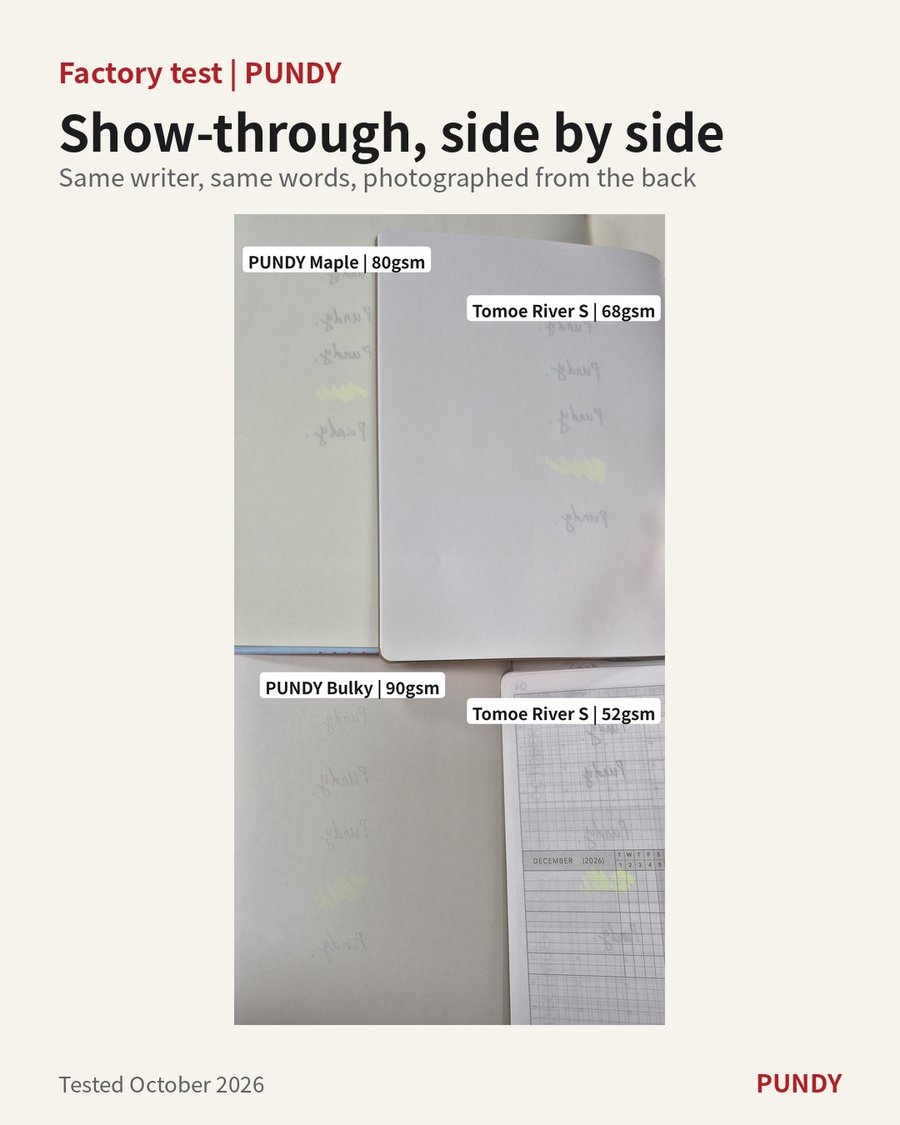
Show-through comparison, back of each page. Same writer and same five pens, photographed by PUNDY in October 2026. Visual comparison only; no opacity measurements were taken.
52gsm. Every pen stayed crisp with no bleed-through, yet the sheet is thin enough that writing on the back is easy to read. With the ink we used, 52gsm showed the most sheen, with a pink-metallic tint once dry. Rubbed after writing, strokes smudged more easily than on the reference papers, so left-handed writers should blot or pause before turning the page.
68gsm. Lines stayed just as clean. Show-through dropped noticeably, roughly matching PUNDY Maple, and sheen was still easy to see. It keeps the Tomoe River feel with less visible show-through in our test.
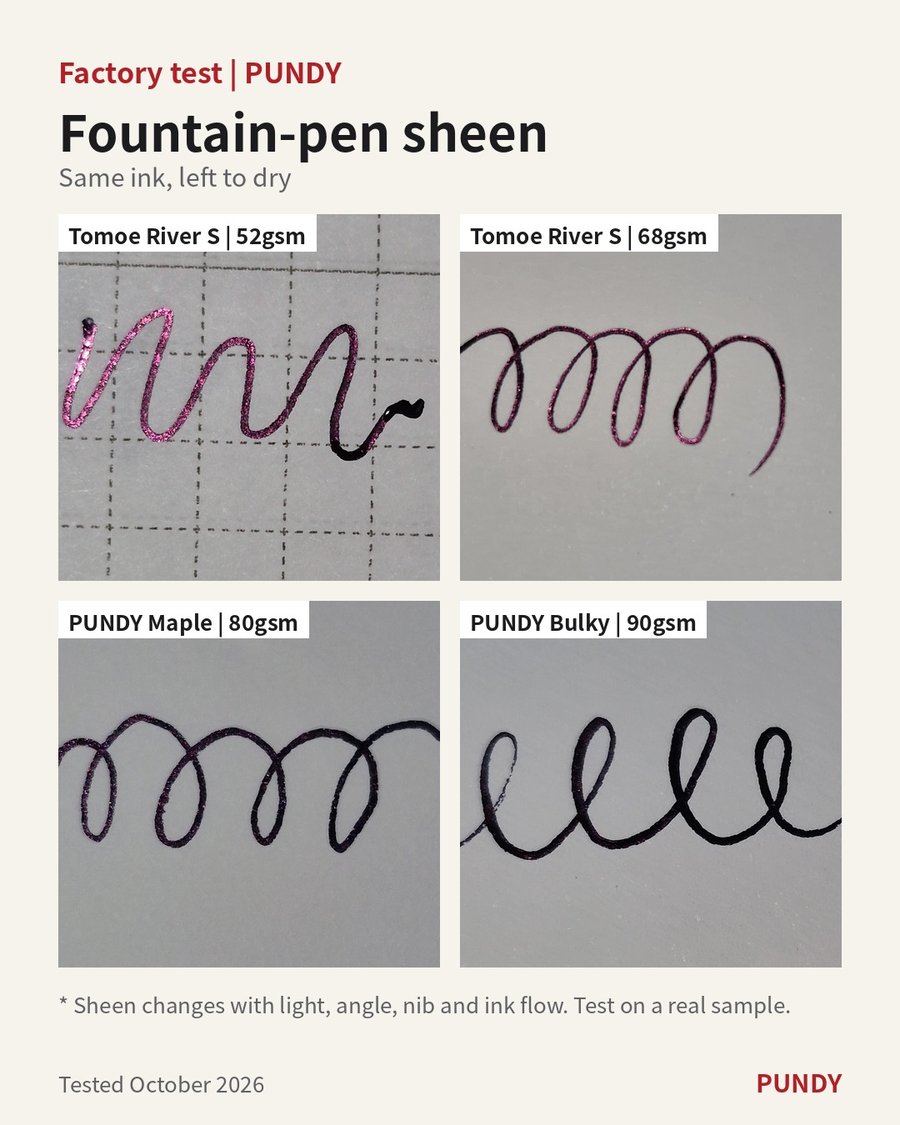
Fountain-pen sheen comparison. Same pen and ink on all four papers, photographed after drying. Apparent sheen varies with lighting and viewing angle.
Which weight fits your notebook?
- Sheen matters most: try 52gsm first, then confirm with the inks your customers use.
- Lightweight notebooks with high page counts: consider 52gsm. For a target spine thickness, confirm paper caliper and the finished construction with the manufacturer, since gsm measures weight, not thickness.
- Notebooks where less show-through matters, especially for two-sided writing: consider 68gsm.
- Corporate or gift notebooks: choose by the pens people will use and the page layout, then test both weights.
- Mostly highlighters or markers: test feathering, bleed-through and show-through with the actual pens, and compare other papers if needed.
For how gsm relates to US pound weights, see Paper Weight Explained: lb vs gsm. For a wider comparison of PUNDY papers, see How to Choose Paper for Custom Notebooks.
Common mistakes when choosing between them
- Judging sheen from one photo; lighting changes it.
- Confusing show-through with bleed-through.
- Testing with only a fountain pen when your users will write with gel pens and highlighters.
- Forgetting drying time for left-handed users and fast note-takers.
- Ordering a full run without testing the actual paper with your target pens.
Test checklist for your samples
- Write the same line with each pen your customers use.
- Check the back of the page under daylight.
- Rub a stroke after 10, 30 and 60 seconds.
- Look at fountain-pen strokes at an angle under two light sources.
- Write on both sides of one sheet and read the front.
Custom Tomoe River notebooks at PUNDY
PUNDY Co., Ltd. makes custom Tomoe River paper notebooks in both 52gsm and 68gsm, and 68gsm is one of our standard specifications. Available formats include A4, B5, A5, A6 and custom sizes, with hardcover or softcover construction and sewn, perfect-bound or ring-binder options (lay-flat results depend on spine design and are confirmed on a sample), plus blank, lined, dot, grid or custom layouts. Paper samples are available, so your team can run the checklist above with its own pens before you decide.
FAQ
Is Tomoe River 68gsm less see-through than 52gsm?
Yes. In our test, 68gsm showed noticeably less show-through, similar to the 80gsm reference paper we tested.
Which Tomoe River weight shows more fountain-pen sheen?
52gsm showed the strongest sheen in our test; 68gsm still showed visible sheen.
Can I write on both sides of Tomoe River S 52gsm?
Yes, if you accept visible show-through. We saw pronounced show-through on 52gsm but no bleed-through with the five pens we tested. Check a physical sample with your own pens.
Does ink dry slowly on Tomoe River S paper?
In our rub test after writing, fountain-pen strokes on both Tomoe River S weights smudged more easily than on the two reference papers. Drying also depends on ink, nib and conditions, so test with the pens you plan to use, especially for left-handed writers.
Planning a Tomoe River notebook?Send us your specification. We will review your requirements and respond as soon as possible.
Standard MOQ is 500 units per design.
Press Release
 4.6★ on Google · Trusted Since 1990
Real emails from international clients. Real Google reviews from long-term partners. See what 36 years of getting the details right looks like — in their own words.
Read More Awards of Taiwan Golden Print
PUNDY won awards of Taiwan Golden Print in 2011.
Read More New Notebook for 2015
The business notebook designed by PUNDY is especially made for office users who love simple and fashionable designs.
Read More